

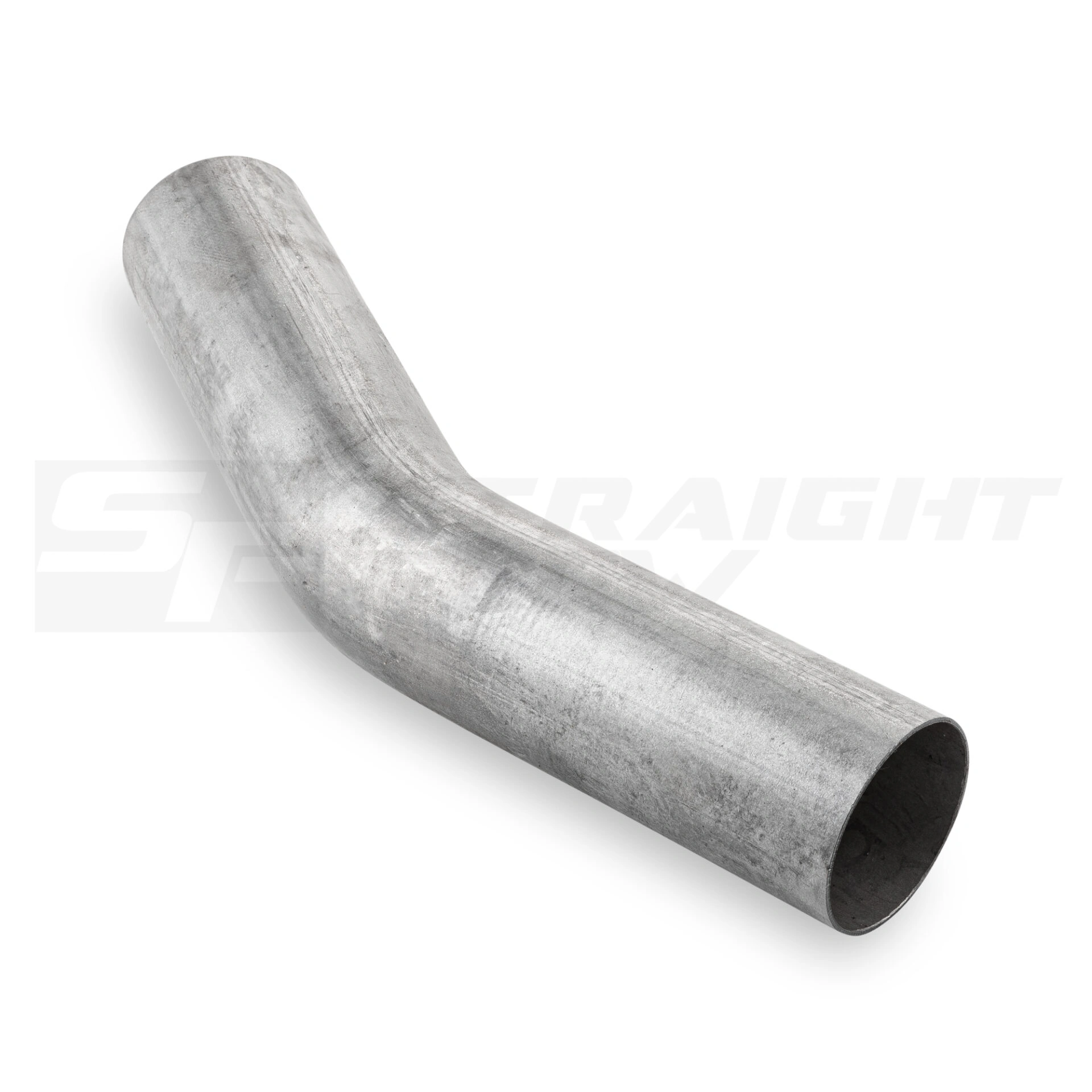
Shop straight exhaust tubing, stainless steel and aluminized steel pipes, exhaust elbows and U-bends for custom exhaust fabrication, repairs and performance builds. Choose from multiple diameters, lengths and bend angles to create the ideal exhaust system.
[sf_more]
Exhaust Tubing and Elbows for Professional Fabrication
Exhaust tubing and elbows are essential components when building, repairing or modifying an exhaust system. Straight pipes form the main sections of the exhaust route, while tubing elbows allow the system to follow the available space beneath the vehicle.
Universal tubing can connect catalytic converters, exhaust flex pipes, resonators, stainless steel mufflers and tail pipes within one complete exhaust system.
Straightflow supplies universal exhaust tubing components for professional fabrication and repair work. The range allows workshops and exhaust specialists to select a suitable material, diameter, length and bend angle for anything from a local pipe repair to a complete custom exhaust system.
Unlike vehicle-specific exhaust sections, universal tubing and elbows can be measured, cut, positioned and welded according to the exact requirements of each installation. Therefore, they are especially suitable for custom exhaust fabrication, performance applications and professional workshop use.
Stainless Steel Exhaust Tubing
Stainless steel exhaust tubing is widely used for custom and performance exhaust systems because it combines durability, corrosion resistance and a professional appearance. It is suitable for long-term exhaust builds, motorsport projects and vehicles exposed to demanding operating conditions.
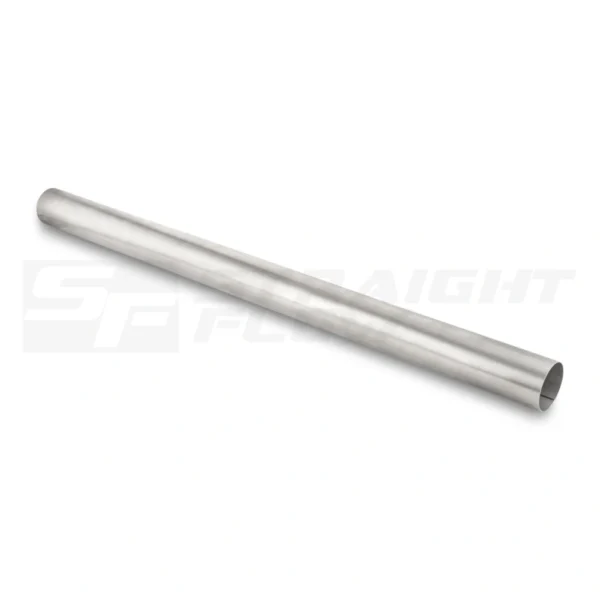
Straightflow offers straight stainless steel exhaust tubes in a range of commonly used diameters and lengths. These tubes can be used to fabricate complete exhaust systems, replace damaged sections or connect individual exhaust components.
Before ordering, check the outside diameter, wall thickness and required tube length. The intended joining method should also be considered, whether the pipe will be welded, clamped or connected using sleeves and other exhaust mounting parts.
Stainless Steel Exhaust Elbows
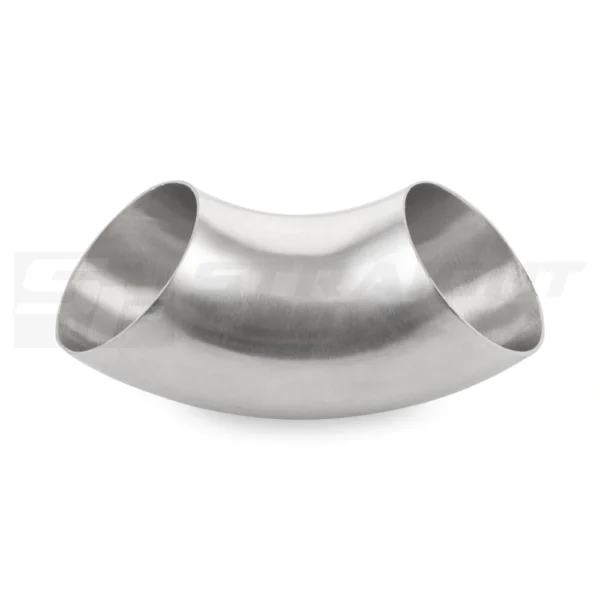
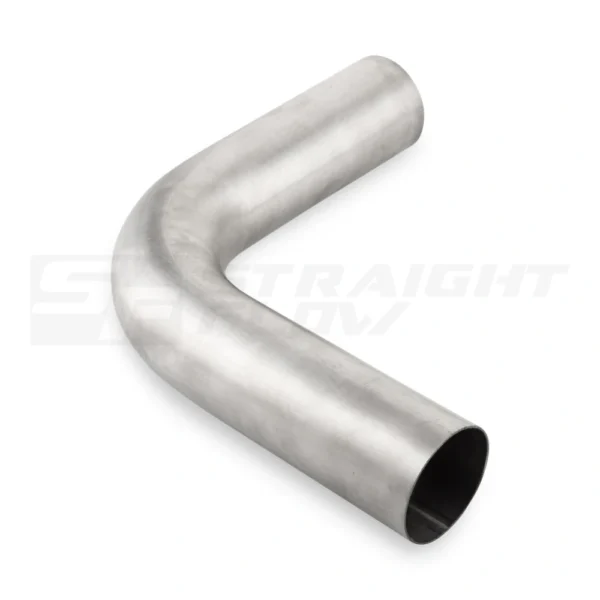
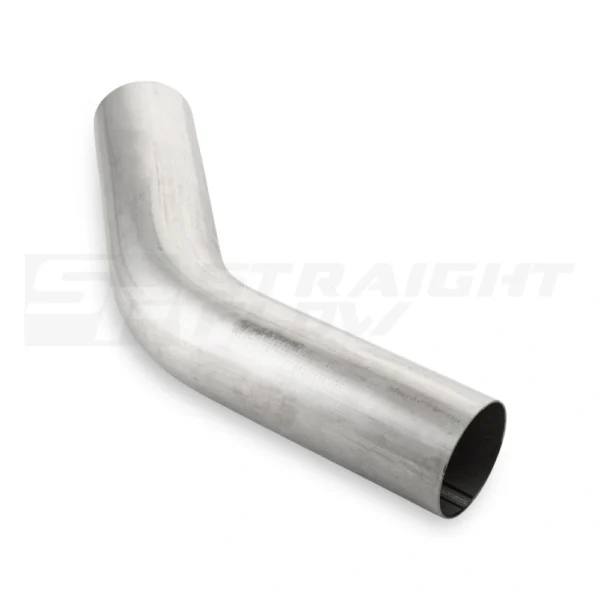
Stainless steel exhaust elbows allow the pipework to change direction while maintaining a controlled exhaust route. They are used where a straight pipe cannot follow the shape of the vehicle floor or where the system must pass around suspension components, the fuel tank or other obstacles.
Our stainless steel tubing elbows are available in several configurations, including:
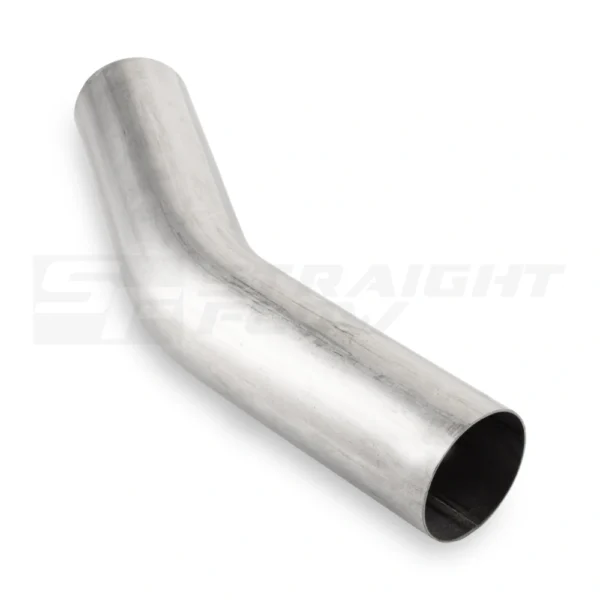
- 30° exhaust elbows
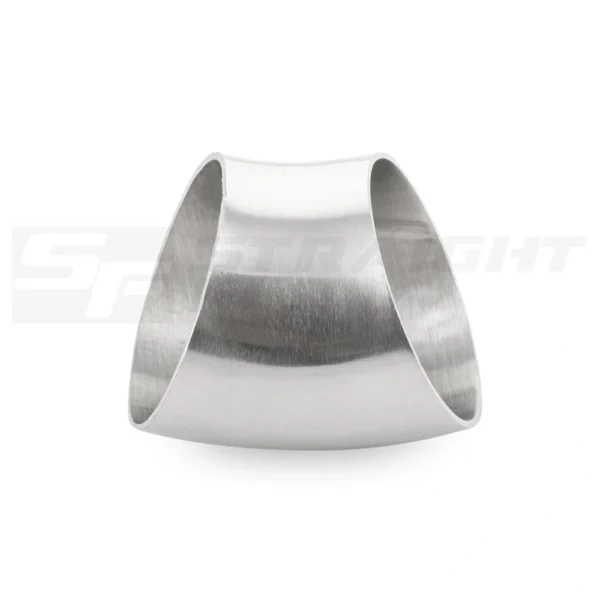
- 45° exhaust elbows
- 60° exhaust elbows
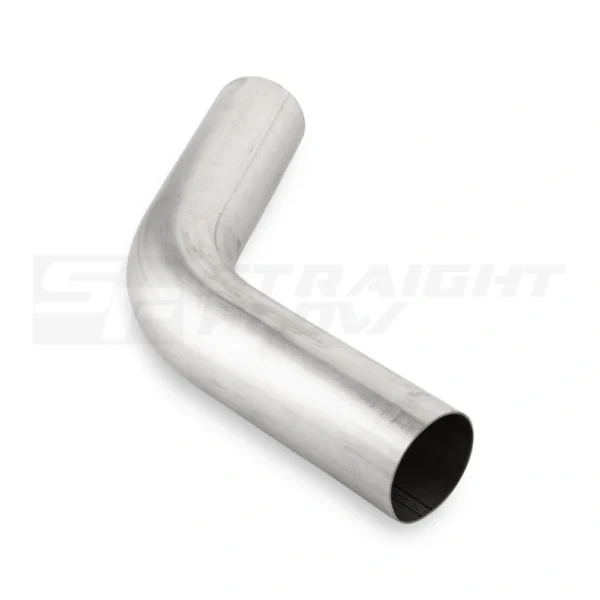
- 90° exhaust elbows
- U-bend exhaust tubing
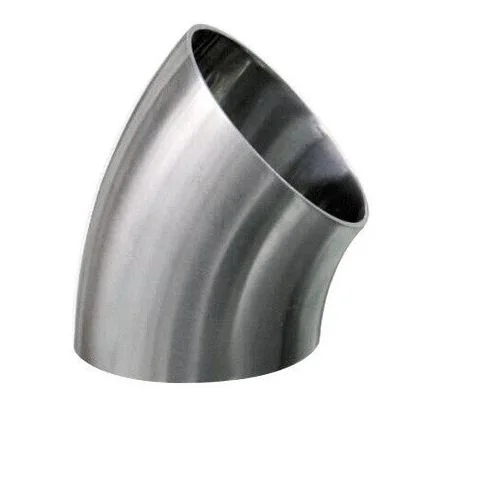
- Short-radius 45° corners
- Short-radius 90° corners
These universal steel elbows can be cut and combined to create a wide range of exhaust routes for repair, fabrication and performance applications.
Aluminized Steel Tubing and Elbows
Aluminized steel is a practical and economical material for conventional exhaust repairs and standard road vehicle applications. Its protective aluminium-silicon coating improves resistance to heat and corrosion while keeping material costs lower than stainless steel.
Straightflow offers straight aluminized exhaust tubing and universal aluminized steel elbows in several angles and diameters. These components are suitable for replacing damaged exhaust sections, extending existing pipework and fabricating cost-effective custom exhaust systems.
Stainless steel is generally preferred for long-term, premium and performance-oriented projects. In contrast, aluminized steel is well suited to routine repairs and applications where price is an important consideration.
Straight Exhaust Pipes
A straight exhaust pipe forms the main connection between the different components of an exhaust system. It may be used between the catalytic converter and muffler, around a flexible pipe or as part of a completely custom exhaust layout.
Straightflow supplies straight exhaust tubing in multiple diameters, wall thicknesses and lengths. Selected products are available in both 50 cm and 1 metre sections, allowing fabricators to purchase a practical amount of tubing for each project.
For repair work, the new straight pipe should normally match the outside diameter of the existing exhaust system. For custom fabrication, the diameter should be selected according to engine output, exhaust flow requirements and the overall system design.
30°, 45°, 60° and 90° Exhaust Elbows
The correct exhaust elbow angle makes it possible to route the pipework around vehicle components while maintaining sufficient clearance and avoiding unnecessary joints.
- 30° elbows are suitable for gentle changes in direction and small alignment corrections.
- 45° elbows provide a moderate directional change and are commonly used in custom exhaust fabrication.
- 60° elbows are useful where a stronger change in direction is required without using a full 90° bend.
- 90° elbows provide a major directional change and are often used in compact exhaust layouts.
The best angle depends on the available installation space, the required exhaust route and the position of nearby components.
U-Bend Exhaust Tubing
U-bend exhaust tubing provides a compact 180° change in direction. It is commonly used in custom exhaust fabrication, motorsport projects and performance systems where the exhaust route must turn back within a limited space.
A U-shaped tubing elbow can also be cut into two separate bends. This gives the fabricator additional flexibility when several elbows are required. Before ordering, check the tube diameter, bend radius, wall thickness and available installation space.
Short-Radius Exhaust Elbows
Short-radius exhaust elbows are designed for installations where there is not enough room for a longer and more gradual bend. Their compact shape makes them suitable for tight exhaust routes and local directional changes.
Because a tighter bend can influence exhaust flow more than a gradual elbow, short corners should only be used where the available space genuinely requires them. The selected diameter and bend position should allow exhaust gases to flow without unnecessary restriction.
How to Choose the Correct Exhaust Tube Diameter
The correct exhaust tube diameter depends on the existing exhaust system, engine output, intended vehicle use and the components being connected.
For repairs, the replacement tubing should normally match the outside diameter of the original pipe. For custom and performance exhaust systems, the diameter should be selected as part of the complete system design.
A pipe that is too small may create excessive exhaust restriction. However, an unnecessarily large pipe may make installation more difficult and may not deliver the intended performance benefit.
Before ordering, confirm:
- The outside diameter of the pipe
- The required wall thickness
- The necessary tube length
- The bend angle and radius
- The joining or welding method
- The available installation space
Choosing Between Stainless Steel and Aluminized Steel
Both stainless steel and aluminized steel can be used for exhaust fabrication, but each material is suited to different priorities.
- Stainless steel provides excellent corrosion resistance, durability and a high-quality finish. It is well suited to custom, performance and long-term exhaust builds.
- Aluminized steel offers a cost-effective solution for conventional exhaust repairs and standard road vehicle applications.
The best choice depends on the vehicle, expected service life, exposure to moisture and road salt, fabrication method and available budget.
Applications
Straightflow exhaust tubing and elbows are commonly used for:
- Custom exhaust system fabrication
- Straight pipe replacement and repair
- Performance exhaust systems
- Motorsport and project vehicles
- Connecting catalytic converters and flexible pipes
- Installing resonators and mufflers
- Modifying existing exhaust routes
- Turbo and custom pipework projects
- Professional workshop installations
To complete the exhaust system, combine the selected tubing with compatible universal catalytic converters, flexible exhaust pipes, mufflers and resonators, exhaust tail pipes and suitable connectors and mounting parts.
Why Choose Straightflow Exhaust Tubing and Elbows?
Straightflow supplies universal exhaust fabrication components for professional workshops, exhaust specialists and custom vehicle projects.
Key advantages include:
- Stainless steel and aluminized steel options
- Straight exhaust pipes in multiple diameters and lengths
- 30°, 45°, 60° and 90° tubing elbows
- U-bend exhaust tubing
- Compact short-radius elbows
- Components suitable for cutting and welding
- Solutions for repair, custom fabrication and performance applications
- Compatible exhaust components available in one product range
- Fast shipping across Europe
[sf_faq]
What is exhaust tubing used for?
Exhaust tubing is used to connect the individual components of an exhaust system, including catalytic converters, flexible pipes, resonators, mufflers and tail pipes. It can be used for repairs, replacement sections and complete custom exhaust fabrication.
What is an exhaust elbow?
An exhaust elbow is a curved section of tubing used to change the direction of the exhaust route. Elbows are available in different angles and diameters so the pipework can follow the available space beneath the vehicle.
What is the difference between stainless steel and aluminized exhaust tubing?
Stainless steel provides greater corrosion resistance, durability and a premium finish, making it suitable for long-term and performance exhaust systems. Aluminized steel is a more economical option commonly used for standard exhaust repairs and road vehicle applications.
Which exhaust tube diameter should I choose?
For repair work, choose tubing that matches the outside diameter of the existing exhaust pipe. For a custom system, the correct diameter depends on the engine, power output, exhaust configuration and intended use.
Are exhaust tube dimensions based on the inside or outside diameter?
Exhaust tubing is normally specified by its outside diameter. Always check the individual product specifications before ordering, as wall thickness affects the internal diameter.
What exhaust elbow angle do I need?
The required angle depends on the route of the exhaust system. A 30° bend is suitable for a minor adjustment, while 45°, 60° and 90° elbows provide progressively greater changes in direction.
What is U-bend exhaust tubing used for?
U-bend exhaust tubing provides a compact 180° change in direction. It is commonly used in custom exhaust fabrication, performance systems and motorsport projects. It can also be cut into separate elbows when several bends are required.
What is the difference between a universal elbow and a short-radius elbow?
A universal elbow normally creates a longer and more gradual bend, while a short-radius elbow changes direction within a smaller space. Short elbows are useful in compact installations but should be positioned carefully to maintain good exhaust flow.
Can Straightflow exhaust tubing and elbows be welded?
Yes. These universal exhaust components are intended for professional fabrication and can be cut and welded into a custom or repaired exhaust system using a welding process suitable for the selected material.
Can stainless steel and aluminized steel be used in the same exhaust system?
They can be combined, but the materials require appropriate joining and welding techniques. For the best durability and consistency, professional installation is recommended.
Are 50 cm and 1 metre exhaust tubes available?
Selected Straightflow straight exhaust tubes are available in 50 cm and 1 metre lengths. Check the individual product page for the available diameter, length and wall thickness.
Are these tubing and elbows designed for a specific vehicle?
No. The products in this category are universal fabrication components rather than direct-fit vehicle-specific exhaust sections. They must be measured, cut and installed according to the requirements of each project.
Can these products be used for performance exhaust systems?
Yes. Stainless steel tubing, U-bends and universal exhaust elbows are commonly used for performance and motorsport exhaust fabrication. The correct diameter, material and routing should be selected according to the engine and project requirements.