
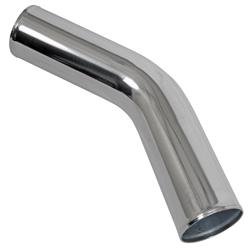
Shop universal aluminium pipes, elbows and heavy-duty connectors for custom intercooler, turbo and air intake systems. Choose from straight tubes and 45°, 60°, 90° and 180° bends in multiple diameters for professional automotive fabrication.
[sf_more]
Aluminium Pipes for Intercooler and Turbo Systems
Custom turbo and intercooler systems often require a combination of straight pipes, bends and removable connectors. Straightflow aluminium tubing allows professional workshops and individual fabricators to create a pipe route that matches the vehicle layout.
Aluminium offers a useful combination of low weight, corrosion resistance and fabrication flexibility. Therefore, it works well in charge-air, intake and intercooler pipework. The smooth internal surface also helps maintain an unobstructed airflow path when the installer selects the correct pipe diameter and creates accurate joints.
The Straightflow range includes straight aluminium pipes, aluminium elbows in several angles and heavy-duty aluminium connectors. As a result, fabricators can build both simple pipe extensions and complete custom piping systems.
What Are Aluminium Pipes Used For?
Universal aluminium pipes can serve several functions in automotive fabrication. Most commonly, installers use them to route air between the turbocharger, intercooler and engine intake.
Typical applications include:
- Turbocharger charge pipes
- Intercooler inlet and outlet pipes
- Cold air intake systems
- Custom air filter pipework
- Compressor outlet pipes
- Throttle body connections
- Motorsport intake systems
- Universal vehicle fabrication projects
However, aluminium pipes in this category are universal components. They do not provide direct vehicle-specific fitment. Therefore, installation usually requires measuring, cutting, joining and test fitting.
Benefits of Aluminium Intercooler Piping
Aluminium is widely used in intercooler and intake systems because it provides several practical advantages.
- Low weight: aluminium weighs less than many steel alternatives.
- Corrosion resistance: it resists moisture and normal under-bonnet conditions.
- Good fabrication potential: professional fabricators can cut and weld it into custom layouts.
- Wide diameter selection: different sizes support standard and high-flow applications.
- Clean appearance: aluminium tubing creates a professional finish in visible engine bays.
- Suitable for silicone connections: compatible hoses can join separate pipe sections.
Nevertheless, the complete system must use suitable clamps, couplers and supports. Even a correctly sized aluminium pipe may separate from a hose if the connection cannot withstand boost pressure.
Straight Aluminium Tubes
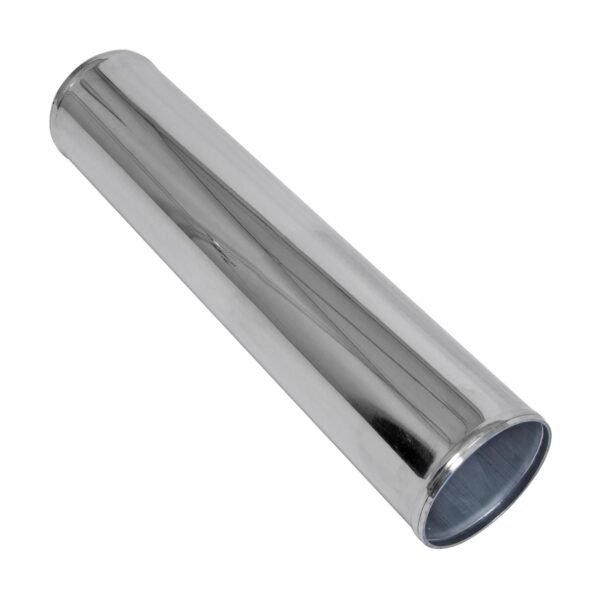
Straight aluminium tubes form the main sections of a custom pipe route. They work between bends, intercoolers, turbochargers and other intake components.
Straightflow offers 50 cm aluminium pipe sections in multiple diameters. Therefore, the installer can select a suitable size and cut the tube according to the project requirements.
Before cutting, plan the entire route and allow enough length for:
- Silicone hose overlap
- Clamping areas
- Welded connections
- Component movement
- Final alignment adjustments
Measure twice before making the first cut. A pipe that is slightly too long can still be shortened. In contrast, a section that is too short may require an additional connection.
Aluminium Elbows and Bends
Aluminium elbows change the direction of the pipe route without requiring several short welded pieces. A correctly selected bend can make the system more compact and reduce the number of joints.
The category includes aluminium bends in several angles:
- 45-degree aluminium elbows
- 60-degree aluminium elbows
- 90-degree aluminium elbows
- 180-degree aluminium elbows
Each angle serves a different purpose. The installer should choose the smallest direction change that creates a clear and practical route.
45-Degree Aluminium Elbows
A 45-degree aluminium elbow creates a gradual change in direction. It suits pipe routes that need moderate adjustment without a sharp turn.
Fabricators often use 45-degree bends to route piping around the radiator, engine accessories or bodywork. In addition, two correctly positioned 45-degree elbows can sometimes replace one restrictive or poorly aligned 90-degree turn.
A gradual bend can also simplify hose alignment. However, the final result depends on the complete layout and available space.
60-Degree Aluminium Elbows
A 60-degree aluminium elbow provides a stronger directional change than a 45-degree bend while remaining less abrupt than a 90-degree elbow.
This angle may suit custom intercooler routes where the pipe must move both sideways and vertically. It can also help when standard 45-degree or 90-degree components do not match the vehicle geometry.
Before cutting the elbow, rotate it into the required position and mark both the direction and cut line. This simple step reduces fabrication errors.
90-Degree Aluminium Elbows
A 90-degree aluminium elbow creates a right-angle turn. It commonly appears near intercooler outlets, throttle bodies and turbocharger connections where the available space is limited.
Although a 90-degree bend makes a compact route possible, the installer should avoid unnecessary sharp turns. Every bend can influence airflow, especially when the pipe diameter is too small or the system contains several direction changes.
Therefore, use a 90-degree elbow when the layout requires it rather than adding one only for convenience.
180-Degree Aluminium Elbows
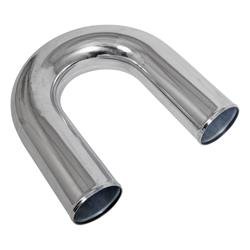
A 180-degree aluminium elbow creates a complete U-shaped direction change. Fabricators can use it as one complete bend or cut it into smaller sections.
This format offers useful flexibility during custom fabrication. For example, one 180-degree elbow may provide two 90-degree bends or several custom-angle pieces, depending on the cut positions.
It can also suit compact intercooler installations where the pipe must return in the opposite direction. However, always check the bend radius and available space before choosing this design.
How to Choose the Correct Pipe Diameter
Pipe diameter affects airflow, boost response, hose compatibility and ease of installation. Therefore, do not automatically select the largest available size.
Before ordering, consider:
- Turbocharger outlet diameter
- Intercooler inlet and outlet dimensions
- Throttle body diameter
- Engine power and airflow requirements
- Available under-bonnet space
- Compatible silicone hose sizes
- Existing pipework dimensions
A pipe that is too narrow may create unnecessary restriction. However, an excessively large pipe increases the internal volume of the system and may make routing more difficult.
The best size normally matches the main connection points and the airflow requirements of the engine. For modified or high-performance applications, consult an experienced fabricator or engine tuner.
How to Measure Aluminium Pipe
Automotive aluminium tubing is commonly selected by its outside diameter. Therefore, measure the outside of the existing pipe or component connection with a calliper.
Do not estimate the diameter by eye. Sizes such as 60 mm, 63 mm, 70 mm and 76 mm can look similar, but they require different hoses and connectors.
Check the following dimensions:
- Pipe outside diameter
- Pipe wall thickness
- Elbow centreline radius
- Total pipe or elbow length
- Straight section available for a hose or clamp
When joining a pipe with a silicone hose, the hose inside diameter should match the pipe outside diameter unless the connection uses a reducer.
Metric and Imperial Pipe Sizes
Many performance parts use both metric and imperial measurements. For example, a product may be described as 3 inches even though its stated metric diameter is approximately 76 mm.
Common approximate conversions include:
- 38 mm – approximately 1.5 inches
- 50 mm – approximately 2 inches
- 63 mm – approximately 2.5 inches
- 70 mm – approximately 2.75 inches
- 76 mm – approximately 3 inches
- 89 mm – approximately 3.5 inches
- 102 mm – approximately 4 inches
Nevertheless, nominal measurements do not always equal the exact physical dimensions. Therefore, compare the stated millimetre measurements before combining parts from different manufacturers.
Aluminium Pipes and Silicone Hoses
Silicone hoses commonly connect separate aluminium pipe sections. Unlike a completely rigid welded system, a hose connection allows limited movement and makes future disassembly easier.
Silicone connections may appear between:
- A turbocharger and aluminium charge pipe
- An aluminium pipe and intercooler
- An intercooler outlet and throttle body pipe
- Two aluminium pipe sections
- Pipes with different diameters
Use a straight silicone coupler when both pipes have the same diameter. In contrast, use a silicone reducer when the two connection points have different diameters.
The hose must suit the intended temperature, pressure and fluid. Not every silicone hose is suitable for fuel, oil or continuous direct contact with exhaust gases.
Straight Silicone Couplers
A straight silicone coupler joins two pipes of the same outside diameter. It creates a removable connection and can absorb a small amount of vibration or movement.
For a secure installation, both aluminium pipe ends should remain straight and correctly aligned. The hose should overlap each pipe far enough to provide a proper clamping area.
Do not use the silicone coupler to correct a large alignment error. Excessive side loading can pull the hose away from one pipe or damage it over time.
Silicone Reducers
A silicone reducer connects pipe sections with different diameters. For example, it may join a smaller turbocharger outlet to a larger intercooler pipe.
Reducers simplify fabrication because they remove the need to create every diameter transition in aluminium. However, the size change should remain appropriate for the airflow path.
Before ordering a reducer, identify which end connects to each component. Then, verify both inside diameters and the available installation length.
Silicone Elbows
A silicone elbow combines a flexible connection with a directional change. This can help where a rigid aluminium bend would leave too little room for alignment or component movement.
However, a long aluminium bend generally provides more structural support than a soft hose. Therefore, plan the system so that the silicone elbow does not carry the weight of nearby pipe sections.
Suitable brackets and support points can reduce movement and protect the connection.
Heavy-Duty Aluminium Connectors
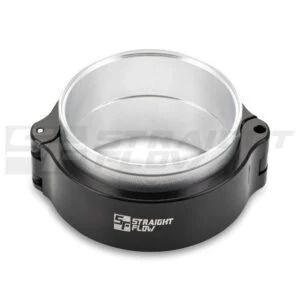
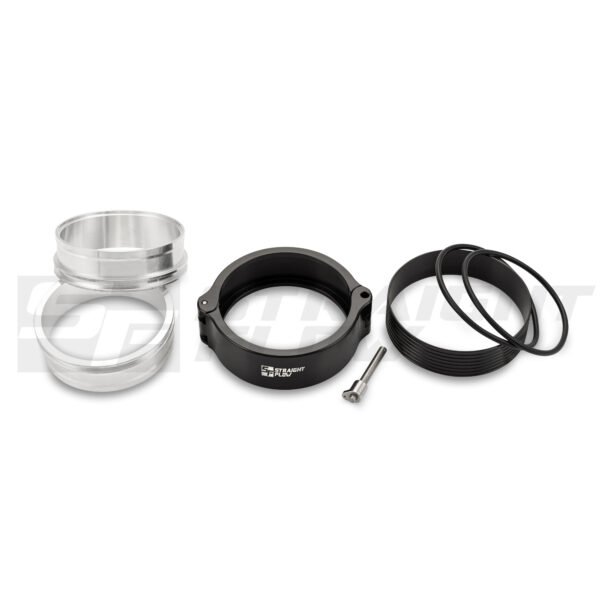
Heavy-duty aluminium connectors create removable joints between compatible pipe sections. The Straightflow range includes HD connector sizes for several commonly used pipe diameters.
These connectors can provide a compact alternative to a long silicone coupling. They may suit custom intercooler systems, racing vehicles and installations that require regular removal.
Before installation, confirm:
- The exact pipe diameter
- The connector profile
- The required welding method
- The available space around the joint
- The expected boost pressure
- The required service access
Both sides must align correctly. A connector should not force misaligned pipes into position.
Beaded Pipe Ends
A raised bead near the end of an aluminium pipe helps prevent a silicone hose from sliding off under pressure. The clamp sits behind the bead and holds the hose against the pipe.
For turbo and intercooler applications, beaded ends provide an important additional level of security. Smooth cut pipe ends may allow a hose to move, particularly when the system operates under higher boost pressure.
If the selected aluminium pipe does not include a bead, a fabricator can create one with suitable equipment or weld a retaining bead around the pipe end.
Choosing the Correct Clamps
A suitable clamp distributes pressure evenly around the hose. It should secure the connection without cutting or severely deforming the silicone.
Common options include reinforced worm-drive clamps and T-bolt clamps. T-bolt clamps often suit higher-pressure charge-air systems because they provide strong and even clamping force.
When selecting a clamp:
- Measure the outside diameter of the installed hose
- Choose a clamp with a suitable adjustment range
- Position it behind the pipe bead
- Keep it away from the very edge of the hose
- Tighten it evenly
- Recheck the connection after initial use
Do not overtighten the clamp. Excessive force can damage the hose or deform thin-wall aluminium tubing.
Planning an Intercooler Pipe Route
A good intercooler pipe route should remain as direct as the vehicle layout allows. Excessive pipe length and unnecessary bends increase system volume and create more potential connection points.
Before fabrication, identify:
- The turbocharger outlet position
- The intercooler inlet and outlet locations
- The throttle body connection
- Radiator and fan clearance
- Suspension and steering movement
- Engine movement
- Areas exposed to excessive heat
- Possible mounting points
Temporarily position the pipes before cutting or welding. Then, check bonnet clearance and ensure that the pipework cannot contact moving parts.
Reducing Pressure Loss
A well-designed charge-air system should deliver compressed air efficiently from the turbocharger to the engine. Several factors can increase pressure loss:
- Undersized pipe diameter
- Too many sharp bends
- Poorly aligned joints
- Internal welding obstructions
- Damaged silicone hoses
- Loose clamps and boost leaks
- Unnecessarily long pipe routes
Therefore, use gradual bends where possible and keep the internal path smooth. The entire system should also pass a pressure test after installation.
Preventing Boost Leaks
A boost leak allows compressed air to escape before it reaches the engine. This may reduce performance and affect engine management readings.
Common causes include:
- Loose hose clamps
- Incorrect hose diameter
- Missing pipe beads
- Damaged silicone couplers
- Cracked welds
- Misaligned aluminium pipes
- Oil contamination around the connection
Clean each pipe end before installing the hose. Then, position the clamp correctly and pressure-test the finished system.
Cutting Aluminium Pipes
Use a suitable saw or pipe-cutting tool to create a straight and controlled cut. Secure the tube carefully, but avoid crushing it.
After cutting:
- Remove sharp internal and external edges
- Clean away aluminium particles
- Check that the pipe remains round
- Test the hose or connector fit
- Create a retaining bead when required
Metal particles must not remain inside an intake or intercooler pipe. They could travel toward the turbocharger or engine.
Welding Aluminium Pipework
Professional fabricators commonly use TIG welding for aluminium intake and intercooler systems. The process can create accurate and visually clean joints when the material is prepared correctly.
Before welding, remove dirt, oil and surface oxidation. In addition, align the pipe sections carefully and tack-weld them before completing the joint.
Aluminium welding requires suitable equipment, shielding gas and experience. Therefore, use a qualified fabricator when the finished pipework will operate under boost pressure.
Supporting Custom Pipework
Silicone hoses should not support the full weight of a long aluminium pipe assembly. Engine movement, road vibration and boost pressure can place additional load on every connection.
Use suitable brackets and mounting parts where necessary. At the same time, avoid mounting the pipework so rigidly that it cannot accommodate normal engine movement.
A balanced installation should support the main pipe sections while allowing silicone connections to absorb limited movement.
Heat Management
Charge-air and intake pipes may pass close to exhaust manifolds, turbochargers and downpipes. Radiant heat can increase the temperature of the pipe and surrounding components.
Where possible, route aluminium piping away from extreme heat sources. If space is limited, use suitable heat shields, reflective barriers or thermal sleeves.
Also check that the selected silicone connections have an appropriate temperature rating for their position.
Inspecting Aluminium and Silicone Connections
Regular inspection helps identify problems before a hose separates or a boost leak becomes severe.
Check for:
- Loose clamps
- Hoses moving away from pipe beads
- Cracks or cuts in silicone
- Oil residue around joints
- Contact with sharp bodywork
- Cracked aluminium welds
- Loose mounting brackets
- Signs of heat damage
A light oil film may appear inside turbocharged intake systems. However, heavy oil accumulation may indicate another mechanical issue that requires investigation.
Universal Aluminium Parts for Custom Fabrication
The parts in this category suit universal fabrication rather than direct vehicle-specific replacement. Therefore, customers should select them by dimensions and construction rather than only by vehicle model.
Universal parts give the fabricator greater control over the complete system. They can help create pipework for vehicles that do not have an available direct-fit intercooler kit.
However, custom fabrication requires accurate planning. Always check the available space, pipe diameter and component movement before ordering.
Applications
Straightflow aluminium pipes, elbows and connectors suit many automotive projects, including:
Custom intercooler pipework
Turbocharger system upgrades
Cold air intake systems
Motorsport vehicles
Track and drift cars
Modified road vehicles
Engine conversion projects
Universal fabrication work
Replacement of damaged charge pipes
Professional workshop installations
Why Choose Straightflow Aluminium Pipes and Connectors?
Straightflow offers universal aluminium components for professional automotive fabrication. The category includes straight pipes, several elbow angles and heavy-duty connectors in a broad range of diameters.
Key advantages include:
- Straight aluminium tubes for custom pipe routes
- 45°, 60°, 90° and 180° aluminium bends
- Common intercooler and turbo pipe diameters
- Heavy-duty removable connector options
- Lightweight aluminium construction
- Components suitable for professional cutting and welding
- Parts for intake, intercooler and turbo projects
- Universal solutions for custom fabrication
As a result, workshops can choose the required dimensions and combine several components into one complete pipe system.
For related exhaust fabrication projects, explore our stainless steel tubing and elbows, mounting parts and heat-resistant materials.
[sf_faq]
What are aluminium pipes used for in a car?
Fabricators commonly use aluminium pipes in intercooler, turbocharger and air intake systems. They route air between the turbo, intercooler and engine intake.
Are these aluminium pipes vehicle-specific?
No. They are universal fabrication components. Therefore, choose them according to their diameter, length and bend angle.
Can aluminium pipes be used for intercooler piping?
Yes. Lightweight aluminium tubing commonly forms custom intercooler and charge-air pipework.
How do I choose the correct aluminium pipe diameter?
Compare the turbocharger, intercooler and throttle body connection sizes. Also consider engine airflow requirements and the available installation space.
Is aluminium pipe measured by its inside or outside diameter?
Automotive aluminium tubing is commonly selected by its outside diameter. Always check the detailed product dimensions before ordering.
What size hose fits an aluminium pipe?
The silicone hose inside diameter should normally match the aluminium pipe outside diameter. Use a reducer when the two parts have different sizes.
What is the difference between 63 mm and 2.5-inch piping?
They are often treated as similar sizes, but the exact dimensions may vary. Therefore, compare the stated measurements rather than relying only on nominal inch sizes.
Which aluminium elbow angle should I choose?
Choose the angle that creates the most direct route without contacting nearby components. Use gradual bends whenever the available space allows.
Can I cut a 180-degree aluminium elbow into smaller bends?
Yes. A fabricator can cut a 180-degree elbow into shorter sections or custom angles. However, leave enough straight pipe for welding or hose connections.
Can aluminium intercooler pipes be welded?
Yes. Professional fabricators commonly use TIG welding. The material must be clean and correctly aligned before welding.
Do aluminium pipe ends need a bead?
A raised bead helps keep a silicone hose on the pipe under boost pressure. It is strongly recommended for pressurised intercooler connections.
Can I use ordinary hose clamps on intercooler piping?
A suitable reinforced worm-drive clamp may work in some applications. However, T-bolt clamps often provide stronger and more even pressure for boosted systems.
Why does an intercooler hose keep coming off?
Common causes include loose clamps, missing pipe beads, incorrect hose size, oil contamination, poor alignment and excessive boost pressure.
How can I find a boost leak?
Inspect all hoses, clamps and welds. A controlled pressure or smoke test can help identify air escaping from the system.
Can aluminium piping be used for an air intake?
Yes. Aluminium tubes and elbows can form custom cold air and engine intake pipework.
Can silicone hoses carry fuel or oil?
Standard silicone hoses generally do not suit continuous direct contact with fuel or oil. Use a hose specifically rated for the intended fluid.
Can aluminium intercooler piping rust?
Aluminium does not rust in the same way as ordinary steel. However, it can still oxidise or suffer corrosion in unsuitable conditions.
Should intercooler pipes be supported?
Yes. Long or heavy pipe sections should use suitable brackets. Silicone hoses should not carry the full weight of the system.
Can I use a larger intercooler pipe for better performance?
Not automatically. An excessively large pipe increases system volume and may complicate routing. Select the diameter according to the engine and turbocharger requirements.
Are aluminium pipes suitable for exhaust systems?
Aluminium tubing normally suits intake and charge-air systems rather than hot exhaust gas applications. Use purpose-made steel or stainless steel exhaust tubing for exhaust systems.